About
About ARD
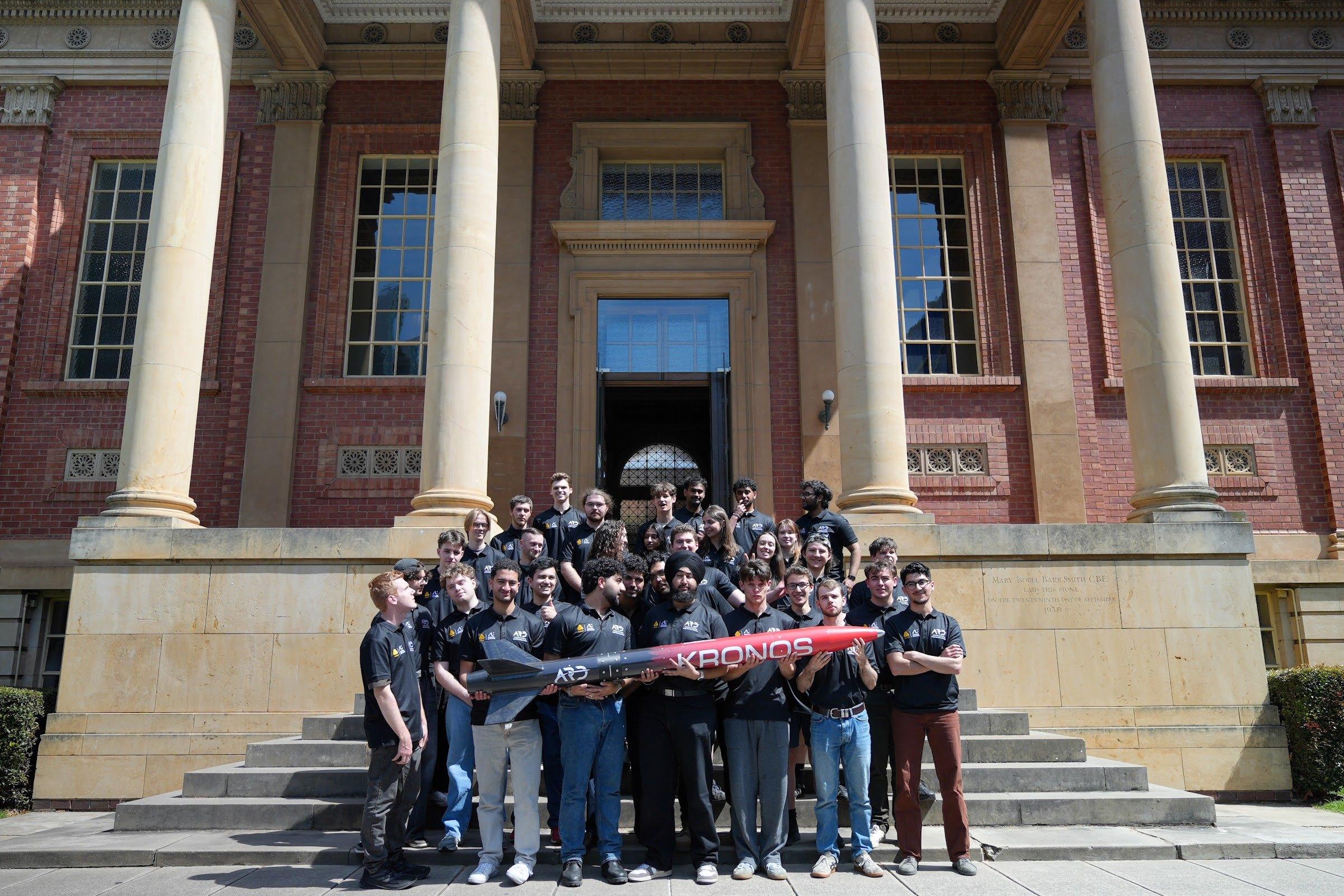

Who we are
South Australia's university rocketry team
The Adept Rocketry Division (ARD) is Adelaide University's student rocketry team and the only university rocketry team in South Australia. Founded in 2018, it has grown to approximately 85 students and has launched over 30 high-powered rockets. ARD is a division of Adept, a not-for-profit that gives university students hands-on engineering project experience.
Competition
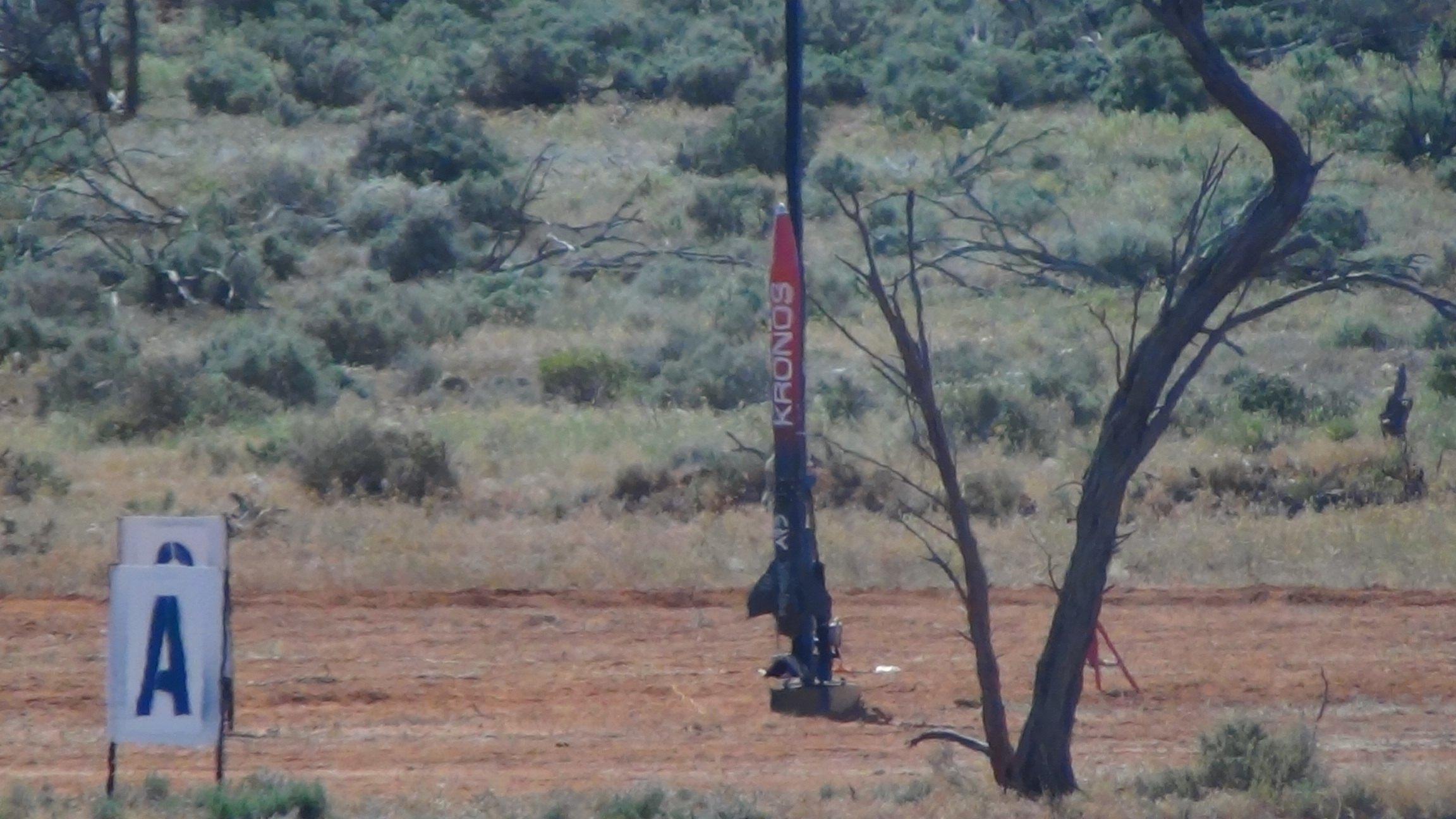
Competing at AURC
ARD represents Adelaide University at the Australian Universities Rocket Competition (AURC). Our teams placed 4th in the 10,000 ft COTS category in 2024; 4th in both the 5,000 ft and 10,000 ft COTS categories in 2025, along with the Lockheed Martin Australia Award for Technical Excellence; and 2nd in the 10,000 ft COTS category in 2026 with Project Kronos.
Sub-team
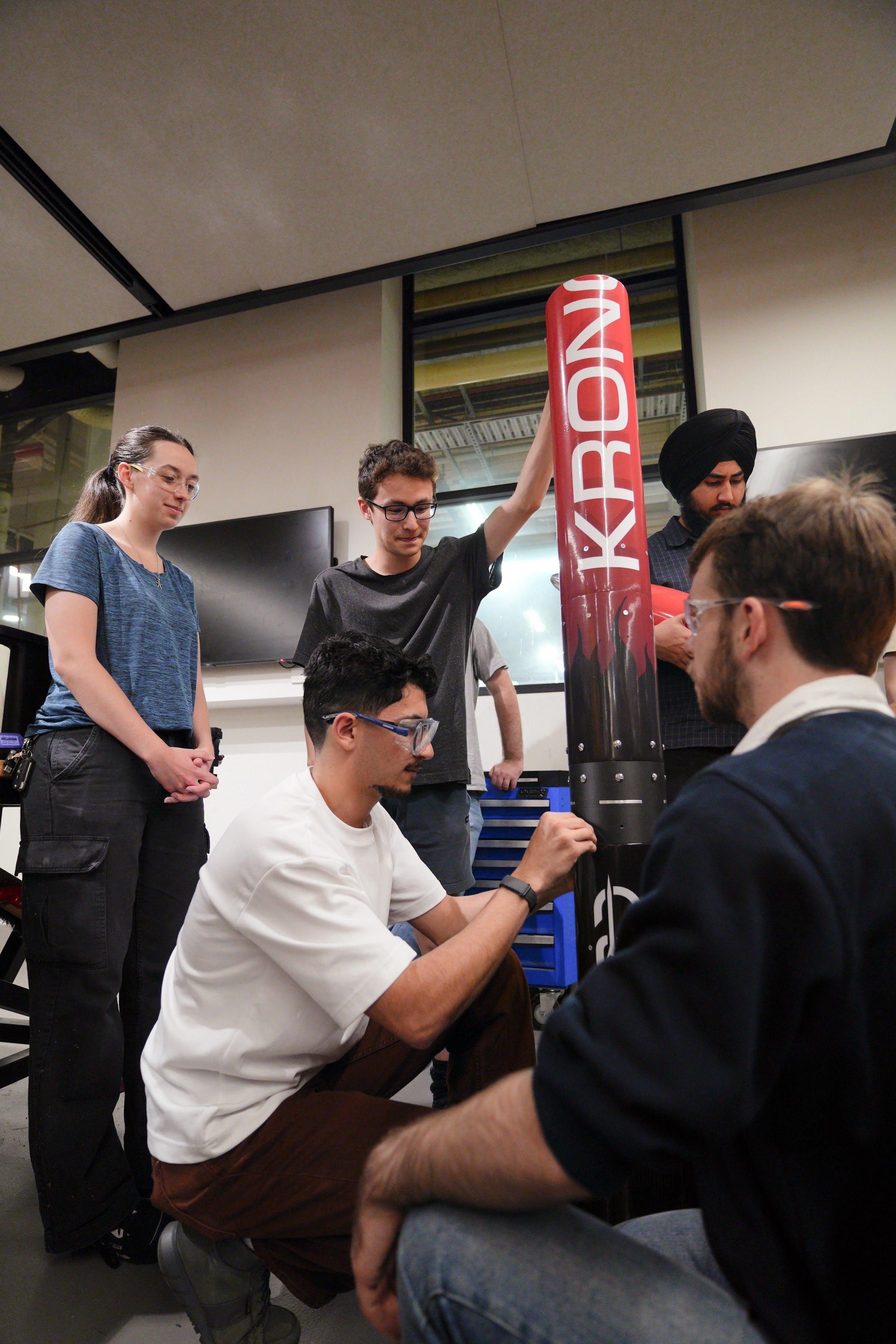
Aerostructures
The airframe, nose cone, fins and boat tail. For Kronos that meant a 3 mm fibreglass airframe, swept fins with a Nomex honeycomb core and a vacuum-bagged boat tail.
Sub-team
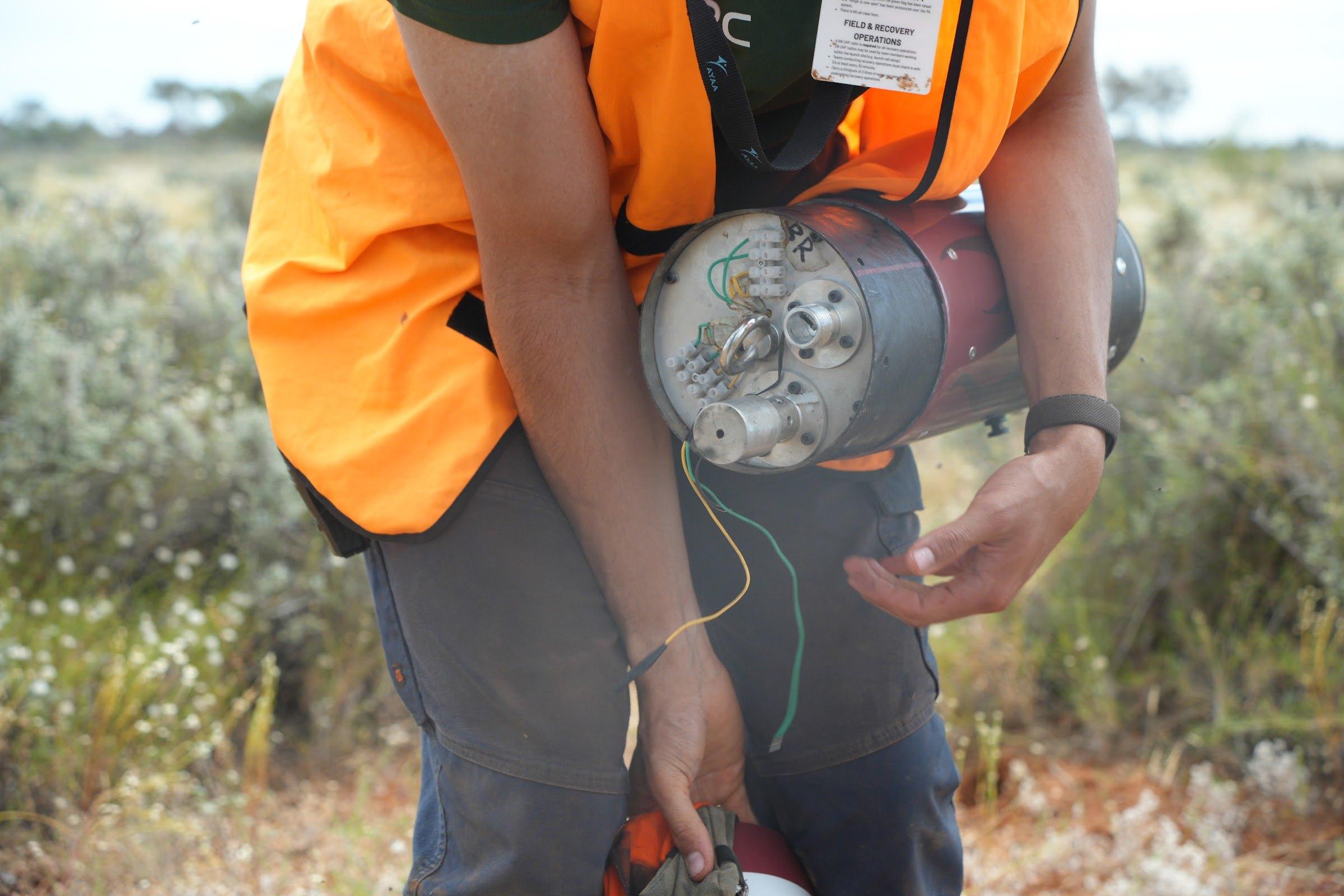
Avionics
ARD's own flight computers, telemetry and power distribution. Kronos flies a three-board STM32 stack on a CAN bus, with LoRa telemetry at 915 MHz.
Sub-team
Flight Systems
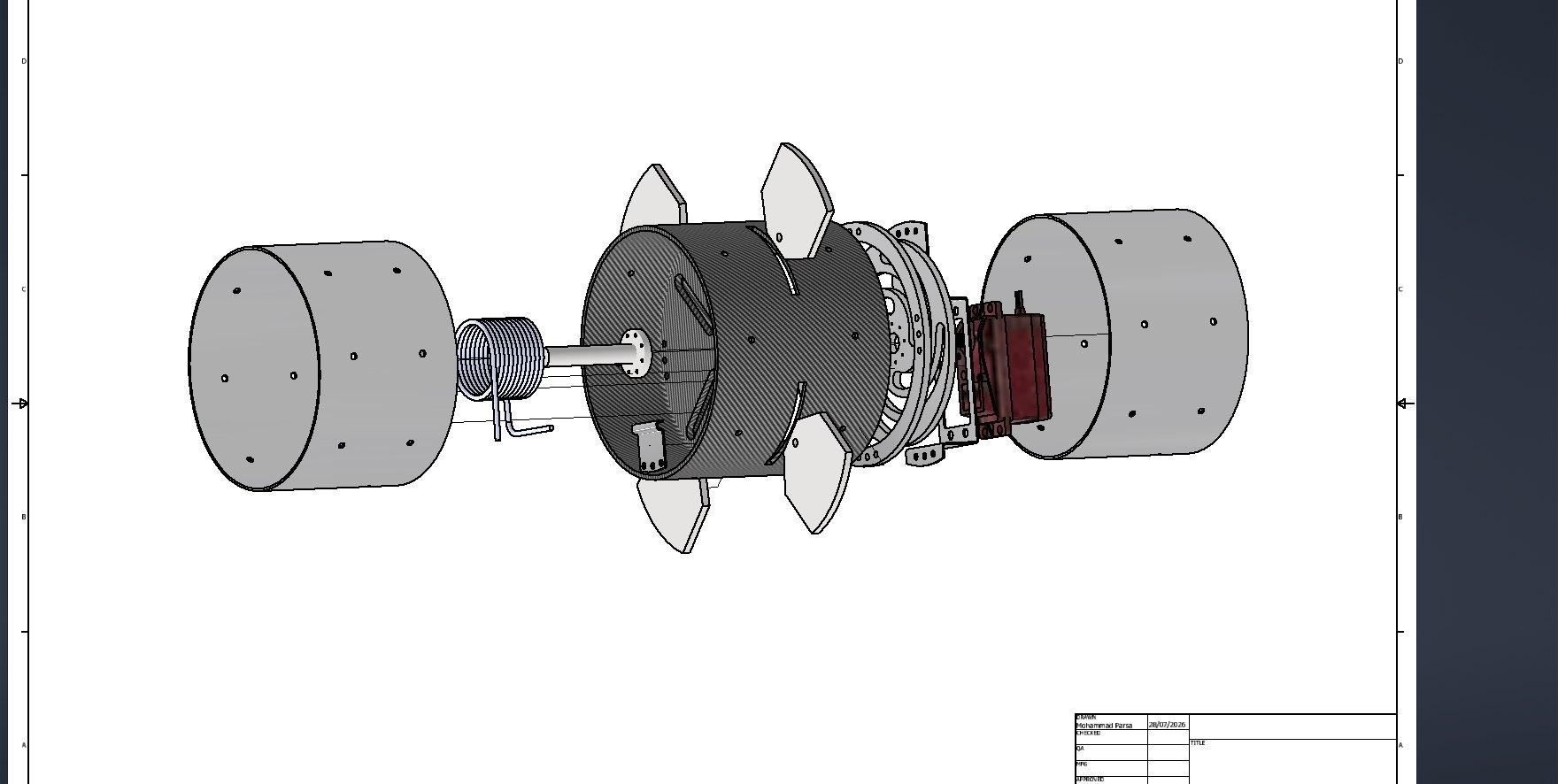
Airbrakes and recovery. Active apogee control trims each rocket to its target altitude, and the recovery system brings it home: on Kronos, a CO2 pyro-pneumatic ejection device and a single-separation, dual-deployment layout.
Sub-team
Ground Station
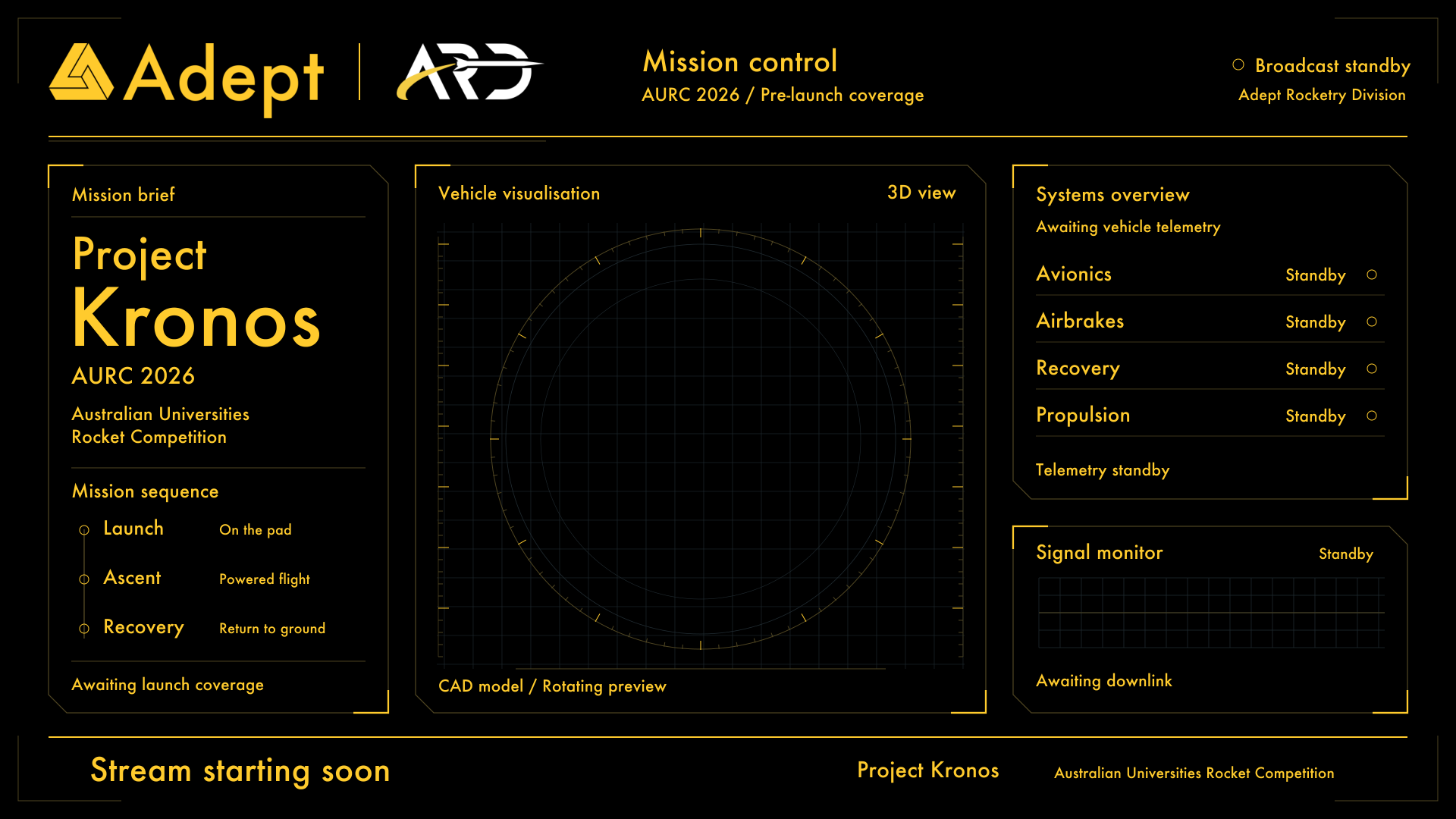
A fully SRAD tracking station: LoRa telemetry, a Yagi antenna on a pan/tilt mount driven by stepper motors, and landing-zone prediction.
Sub-team
Payload
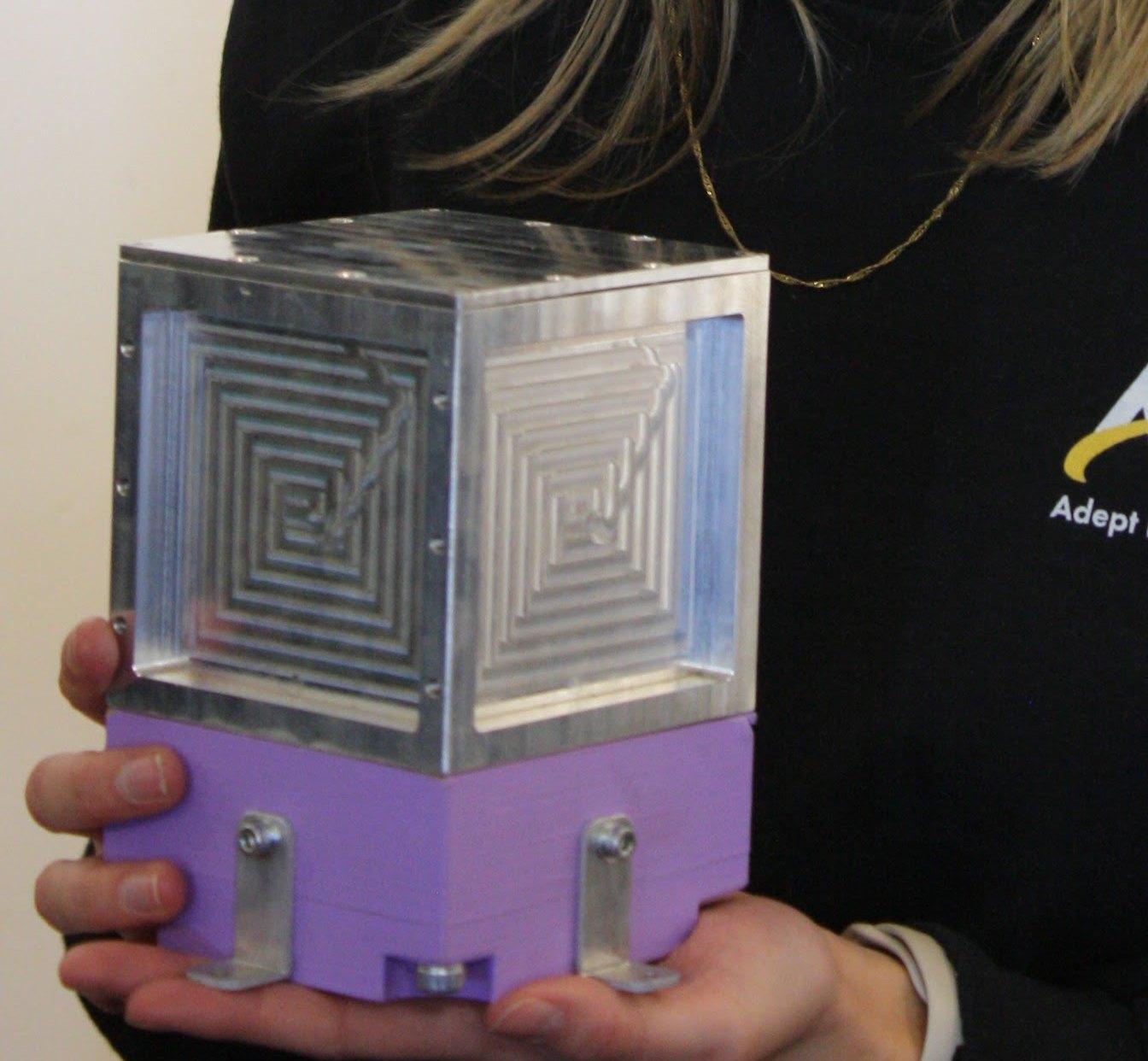
Student-built experiments in CubeSat form, from a microfluidics experiment in 2025 to a 2U soil-moisture CubeSat on Kronos.
Sub-team
Documentation, Compliance and Integration
Created in response to lessons from AURC 2025, this team leads the technical documentation, competition compliance and integration of each rocket.
Research
Project Vulcan
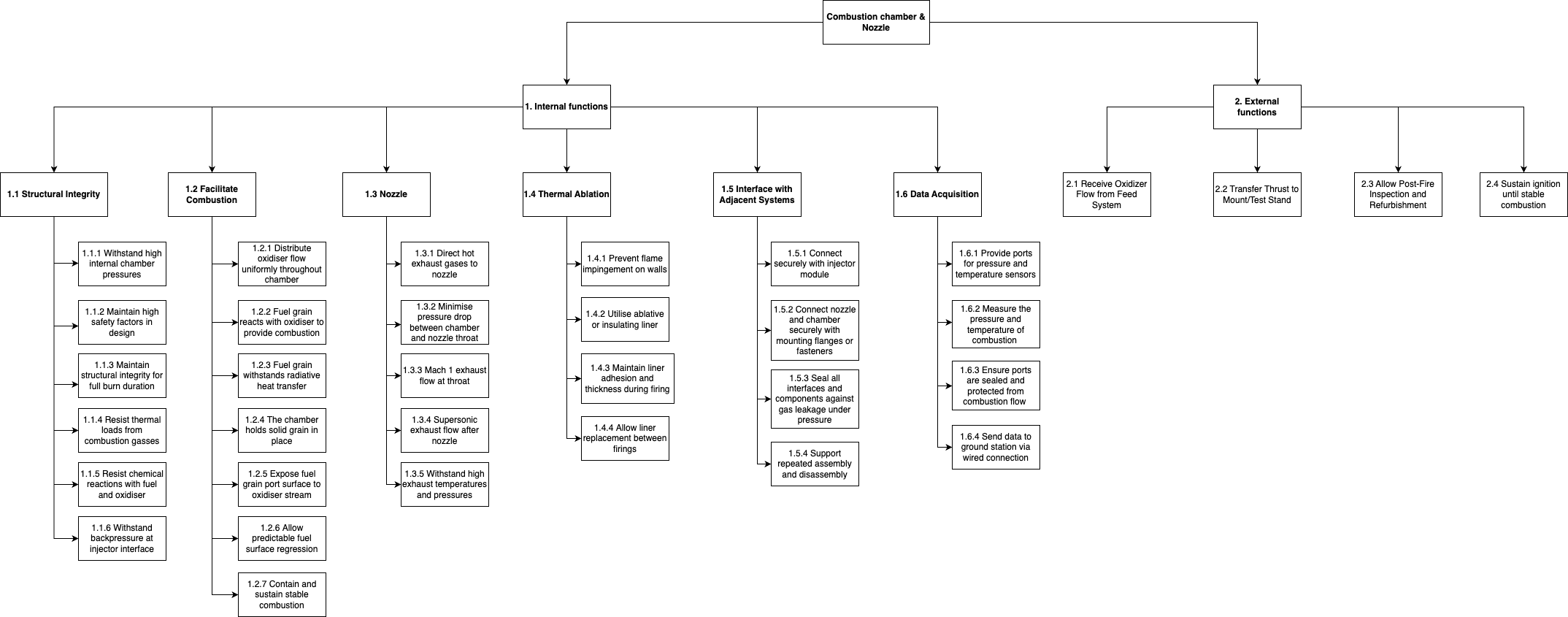
ARD's hybrid rocket engine programme, working towards a static fire of a safe, functioning SRAD hybrid engine.
Research
Composites
ARD's SRAD automated composite spinner made Lightning's fibreglass airframe tubes, and the team is investigating a CNC-controlled spinner to lay fibreglass tow.
How we engineer
Systems engineering
Every rocket follows a V-model systems engineering process, with agile elements.
Design reviews
A preliminary design review in April and a critical design review in May, both with industry guests.
Simulation and analysis
OpenRocket for flight simulation, and ANSYS Fluent and Mechanical for aerodynamic and structural analysis.